- Tianqiao District, Jinan City, Shandong Province, China
- export01@jinbangch.com
- Mon to Sun: 8:00am – 6:00pm

When browsing supermarkets, we’re invariably drawn to drinks and snacks bearing labels like ‘zero-calorie sweetener’ or ‘sugar-free’. Despite tasting distinctly sweet, they claim to be ‘calorie-free and non-glycaemic’. This inevitably raises questions: Is Sucralose Good or Bad ? As one of the most common sugar substitutes, is sucralose a ‘miracle tool’ helping us achieve healthy freedom, or a ‘wolf in sheep’s clothing’?
In truth, the debate over whether Sucralose Good or Bad has long lingered in the minds of countless individuals pursuing a healthy diet.
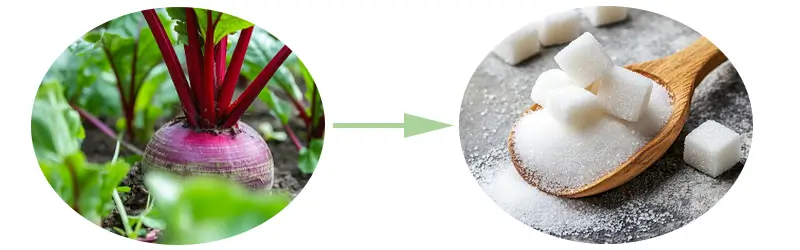
Commonly known as ‘sucralose’, sucralose is a highly concentrated artificial sweetener. Derived from sucrose through chemical synthesis, it boasts exceptional sweetness with minimal calories and no impact on blood sugar levels. Suitable for specific dietary needs, it offers strong stability and broad applicability.
And precisely because of these advantages, that renders the debate over sucralose good or bad all the more pertinent.
| Characteristics | Sucralose | Aspartame | Acesulfame potassium | Stevioside | Erythritol |
| Source | Sucrose derivative | Chemical synthesis | Chemical synthesis | Natural plant extraction | Natural fermentation |
| Sweetness | Approximately 600 times | Approximately 200 times | Approximately 200 times | Approximately 250 times | Approximately 0.7 times |
| Aftertaste | No lingering bitterness | Possible lingering bitterness | Slight metallic taste | Distinct liquorice bitterness | Cooling sensation |
| Stability | Extremely stable (heat-resistant) | Not heat-resistant | Stable | Heat-resistant | Heat-resistant |
| Metabolic process | Heat-resistant | Partially metabolised | Not metabolised, excreted unchanged | Partially metabolised | Not metabolised, excreted unchanged |
A precise sugar-control tool: For diabetics, ketogenic dieters, and those on strict fat-loss regimens, it is an irreplaceable aid. It does not raise blood sugar, does not stimulate insulin secretion, satisfies sweet cravings, and can significantly enhance dietary satisfaction, helping individuals adhere to sugar-control plans.
Protects teeth: Not utilised by oral bacteria, it does not cause tooth decay. Particularly suitable for children, adolescents, and those prone to cavities.
Safety Certification: Most global food safety authorities (such as the US FDA, EU EFSA, and China’s National Health Commission) have approved its use—with an Acceptable Daily Intake (ADI) of 15 milligrams per kilogram of body weight. This means an adult weighing 60kg could safely consume 900mg of sucralose daily (equivalent to the sweetness of approximately 150g of sucrose), a quantity far exceeding typical dietary intake.
Disruption to gut microbiota (a recent research focus):‘Metabolic illusion’ may first manifest in the gut. Some studies suggest high doses of sucralose may suppress beneficial bacteria while promoting harmful ones, affecting microbial balance and thereby indirectly influencing metabolism and immunity.
Reshaping of sweetness thresholds: Long-term, extreme reliance on high-intensity sweeteners may desensitise us to the natural sweetness of foods like fruit, making them seem ‘tasteless’ and heightening cravings for processed sweets.
Complex relationship with appetite: For some individuals, the sweet taste signal may ‘trick’ the brain into anticipating energy intake that never materialises, potentially triggering stronger hunger pangs and compensatory eating behaviour later on.
The benefits and drawbacks of sucralose are not absolute but are closely tied to its usage context, dosage, and the population concerned. This complexity renders the question of whether sucralose good or bad is a more nuanced one.Confronting the sucralose good or bad rather than blindly championing or rejecting it, one would do better to make a rational choice based on individual needs.
Sucralose is neither demon nor angel. It is a potent double-edged sword, fundamentally a tool. Whether sucralose good or bad depends on the individual consuming it, the purpose for which it is used, and the dosage administered. When employed rationally and in moderation with full awareness, it can become a valuable ally on your health journey. Yet, blind reliance and unchecked consumption may trap you in a new predicament of ‘metabolic illusion.’
We are always committed to delivering optimal chemical solutions for all application scenarios.