- Tianqiao District, Jinan City, Shandong Province, China
- export01@jinbangch.com
- Mon to Sun: 8:00am – 6:00pm


Among plant-derived proteases, papain is undoubtedly the most representative and widely used. It is found not only in the familiar papaya fruit but is also actively utilized in food processing, medicine, cosmetics, and research laboratories. Although it is of natural origin, it possesses powerful protein-hydrolyzing capabilities. This article will introduce you to this plant protease.
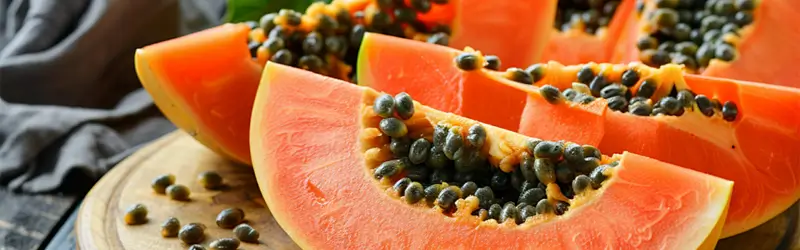
Papain is a cysteine protease extracted from the latex of unripe papaya (Carica papaya) fruit and belongs to the C1 protease family.
From a molecular structural perspective, papain is a single-chain polypeptide composed of 212 amino acid residues, with a molecular weight of approximately 23.4 kDa. Its active site consists of a catalytic triad formed by Cys25, His159, and Asn175. The free thiol group is critical for its activity; therefore, reducing agents or chelating agents such as cysteine, sulfite, or EDTA are often required for activation.
Commercially, papain is typically available in the form of dried latex powder. The enzymatic activity of commercially available food-grade or industrial-grade papain typically ranges from 6,000 to 10,000 USP U/mg.
Papain has a gentle exfoliating effect and can hydrolyze dead keratin on the skin’s surface; therefore, it is added to products such as facial cleansers, face masks, and skin-renewing creams. Compared to physical scrubs, enzymatic exfoliation is gentler and suitable for sensitive skin.
In laboratories, papain is commonly used for tissue dissociation, cell separation, and protein structure analysis. Additionally, it is used in industrial processes such as leather softening, wool shrinkage prevention, silk degumming, and the recovery of silver from waste photographic film.
Niacinamide can inhibit the release of inflammatory factors and regulate pathways such as NF-κB. Studies show that a 4% niacinamide gel is as effective as a 1% clindamycin gel in treating inflammatory acne, without causing antibiotic resistance. It is also helpful for red, swollen pimples and post-inflammatory erythema.
In medicine, nicotinamide is taken orally to treat pellagra. More notably, a Phase III randomized trial published in the *New England Journal of Medicine* in 2015 showed that when high-risk individuals took 500 mg of nicotinamide orally twice daily for 12 months, the number of new cases of non-melanoma skin cancer was reduced by 23% compared to the placebo group, and actinic keratosis was reduced by 13%. However, this refers to oral dosages, which cannot be directly compared to topical niacinamide in skincare products; the general public should not self-administer high doses of niacinamide orally over the long term.
The primary natural food source of papain is the papaya.
Unripe green papayas: These have the highest papain content. When the skin of an unripe papaya is scratched, a white milky sap oozes out, which is rich in papain.
Papaya latex: Almost all commercially available papain is extracted from the latex of green papayas.
Papaya leaves and seeds: These also contain a certain amount of papain, but the concentration is lower than in the latex.
Ripe papayas: As the fruit ripens, the papain content decreases significantly.

Papain is classified by the U.S. FDA as a “Generally Recognized as Safe” (GRAS) substance when used as a food additive and is considered safe at typical food consumption levels. However, the following precautions should be observed when using high doses or in specific populations.
Allergic reactions: This is the primary safety concern. Inhalation of papain dust may cause rhinitis or asthma; skin contact may cause dermatitis. Individuals allergic to latex may experience cross-reactivity with papain due to “latex-fruit syndrome.”
Gastrointestinal irritation: High oral doses may cause a burning sensation in the mouth and throat, stomach pain, or diarrhea.
Skin and eye irritation: Contact with industrial-grade papain or broken skin may cause irritation; direct contact with the eyes should be avoided.
Pregnancy and Breastfeeding: Traditionally, unripe papaya latex has been believed to potentially stimulate the uterus. Although modern evidence is limited, high-dose supplementation with papain preparations is not recommended during pregnancy.
Drug Interactions: When used concurrently with anticoagulants or antiplatelet agents, it may theoretically increase the risk of bleeding; it is recommended to consult a doctor before taking high doses.
Compared to bromelain, fig protease, trypsin, microbial proteases, and others, papain has several distinctive characteristics:
Better heat stability: Papain retains high activity at temperatures around 60–70°C, though prolonged exposure to high temperatures will inactivate it.
Good stability: It maintains activity over a wide range of pH and temperature, facilitating storage, transportation, and food processing.
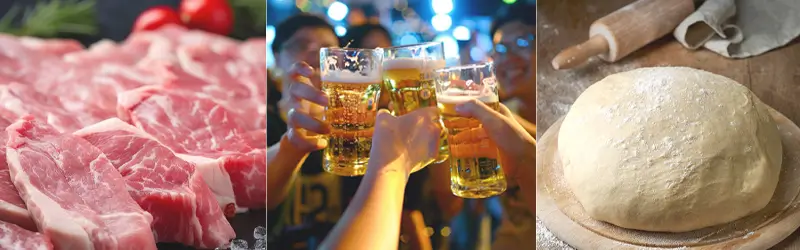
Broad substrate specificity: It can hydrolyze a wide variety of food proteins and connective tissue proteins, and is particularly effective for meat tenderization.
Plant-based and vegan-friendly: Papain is derived from natural sources and poses no risk of animal-derived contamination, making it suitable for vegan, halal, and kosher dietary requirements.
Irreplaceable for antibody fragment preparation: It can specifically cleave IgG to produce Fab/Fc fragments, a property that is difficult for other proteases to fully replicate in immunological research.
If you are interested in Papain Enzyme raw materials, please click “Contact Us” on the right side of the screen. Get B2B factory wholesale prices!
Jinan Jinbon Chem also offers a wide range of high-quality chemical raw materials. With our professional team and extensive experience in international trade and exports, we are committed to providing you with exceptional service. Contact us today for a quote!
We are always committed to delivering optimal chemical solutions for all application scenarios.