- Tianqiao District, Jinan City, Shandong Province, China
- export01@jinbangch.com
- Mon to Sun: 8:00am – 6:00pm

Amid the dense lists of ingredients in sugar-free foods, there’s a name that doesn’t often make headlines—isomalt– Known as the “engineered sugar alcohol” among sweeteners, it isn’t particularly sweet but is extremely stable and mild, often serving as the “unsung hero” in food formulators’ arsenals. Today, let’s talk about this “all-around warrior” in the world of sweeteners.
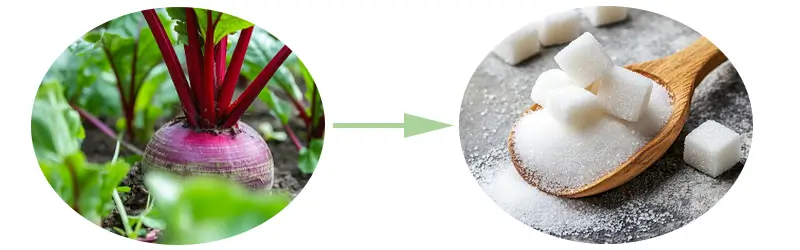
Isomalt is not a synthetic high-intensity sweetener. It is derived from natural sucrose found in sugar beets, which is first converted into isomaltose and then hydrogenated to produce a disaccharide alcohol. It consists primarily of two stereoisomers—glucose-sorbitol and glucose-mannitol—with a molecular weight of approximately 344.3.
In appearance, it is a white crystalline powder with a sweetness level of about 45% to 65% that of sucrose. It has a clean, sweet taste with virtually no aftertaste, such as bitterness or a metallic flavor. Its heat of dissolution is very low, at approximately -9.4 cal/g, and it is hardly digested or absorbed by the human body.
Isomaltulose is only partially hydrolyzed and absorbed in the small intestine; the remainder enters the large intestine for fermentation. Consequently, it has a very low glycemic index (GI), ranging from approximately 2 to 9. Once ingested, it does not cause significant fluctuations in blood glucose or insulin levels. By comparison, sucrose has a GI of approximately 65, maltitol approximately 35, and sorbitol approximately 9. It is commonly used as a substitute for sucrose.
Isomaltulose has a metabolic energy of approximately 2.0–2.4 kcal/g, which is about half that of sucrose. It is not a near-zero-calorie sweetener like erythritol, but as a bulking sweetener, it reduces the caloric load while providing volume, texture, and sweetness. It ferments slowly in the gut, producing short-chain fatty acids that promote gut health while preventing rapid spikes in blood sugar and energy surges.
Oral bacteria, such as Streptococcus mutans, feed on sugar and produce acids that erode tooth enamel. Isomaltulose is largely not utilized by oral microorganisms; it also stimulates saliva production and helps restore the oral pH, making it non-cariogenic. The European Food Safety Authority (EFSA) has recognized its health claim that it “does not impair tooth mineralization.” Although it is not as widely promoted as xylitol for its “bacteria-inhibiting” properties, it is equally a tooth-friendly sugar alcohol.
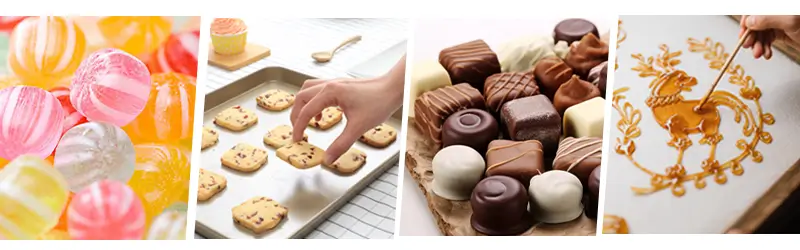
There is no absolute “best” sweetener—only whether it is suitable for a given application. Compared to other commonly used sweeteners, isomalt does indeed offer clear advantages in several scenarios.
– Sorbitol is highly hygroscopic and has a low tolerance level, so it cannot maintain the crispness, transparency, and shelf stability of hard candies. Eating just two or three sugar-free candies can cause bloating and diarrhea, which severely limits its use in hard candies and baked goods.
– Xylitol provides a cooling sensation and helps protect teeth, but it is highly toxic to dogs, so consumers with pets at home must be especially vigilant; however, it is also not recommended to actively feed isomaltulose to pets.
– Erythritol is extremely low in calories but has a bland taste and an abrupt cooling sensation; it tends to recrystallize in hard candies and creates an “out-of-place cooling sensation” in flavors like chocolate and caramel.
In short: sorbitol provides good moisture retention, xylitol offers a cooling sensation and protects teeth, erythritol is nearly zero-calorie, while isomaltulose excels in stability, mildness, and processing compatibility.
The main side effects of isomaltitol are similar to those of other polyols: excessive intake (>50g) may cause bloating, bowel sounds, increased flatulence, and osmotic diarrhea. Children, the elderly, people with irritable bowel syndrome, or first-time users may have lower tolerance.
If you are interested in isomalt crystals, please click “Contact Us” on the right side of the screen. Get B2B factory wholesale prices!
Jinan Jinbon Chem also offers a wide range of high-quality chemical raw materials. With our professional team and extensive experience in international trade and exports, we are committed to providing you with exceptional service. Contact us today for a quote!
We are always committed to delivering optimal chemical solutions for all application scenarios.