
- Tianqiao District, Jinan City, Shandong Province, China
- export01@jinbangch.com
- Mon to Sun: 8:00am – 6:00pm


If there were an “all-rounder” among skincare ingredients, niacinamide would likely be a top contender. It not only brightens the complexion but also controls oil and repairs the skin barrier, and it’s commonly found in anti-aging and sensitive-skin products. However, nicotinamide’s rise to popularity has also been accompanied by numerous misconceptions: some view it as a “powerful skin-lightening agent,” others confuse it with niacin, and still others use it while simultaneously applying chemical exfoliants. What exactly is it? What are its uses?

For many people, their first exposure to niacinamide/ nicotinamide comes from skin-lightening serums, but nicotinamide is not a typical “skin-lightening agent.” It is a form of vitamin B3 with the molecular formula C6H6N2O. It is water-soluble and has a stable pH range of approximately 5–7. In the human body, it can be converted into NAD+, which plays a role in cellular energy metabolism and DNA repair.
It is worth noting that niacinamide is an amide derivative of niacin. While both belong to the vitamin B3 family, they are not the same.
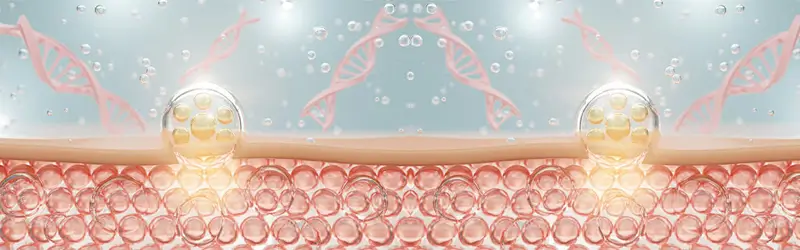
Unlike hydroquinone and arbutin, which directly inhibit tyrosinase, niacinamide’s primary skin-brightening mechanism involves inhibiting the transport of melanosomes from melanocytes to keratinocytes. In other words, once melanin is produced, it is less likely to be “delivered” to the skin’s surface. Consequently, its skin-brightening effects are relatively mild and take longer to manifest, but it has the advantage of being less irritating.
A 2005 study showed that continuous use of 5% niacinamide for 12 weeks can significantly improve facial hyperpigmentation, uneven skin tone, and skin radiance. It also offers supplementary benefits for melasma and post-inflammatory hyperpigmentation.
Niacinamide is gentle on oily skin. A 2006 study had participants use 2% niacinamide for four consecutive weeks, resulting in a significant reduction in sebum production. This helps reduce pore blockage and the appearance of enlarged pores, but consistent use is required, and the effects are relatively mild.
Niacinamide helps improve photoaging by increasing cellular NAD+ levels, thereby supporting DNA repair and energy metabolism. Additionally, niacinamide possesses antioxidant properties that may reduce oxidative stress-induced damage to collagen; in terms of anti-glycation, it may reduce cross-linking damage to collagen caused by advanced glycation end products (AGEs).
Niacinamide can upregulate the synthesis of ceramides, free fatty acids, and cholesterol in the stratum corneum, thereby reducing transepidermal water loss (TEWL) and improving the epidermal barrier function. As a result, niacinamide is often included in products for sensitive skin to help alleviate dryness, redness, and tightness.
Niacinamide can inhibit the release of inflammatory factors and regulate pathways such as NF-κB. Studies show that a 4% niacinamide gel is as effective as a 1% clindamycin gel in treating inflammatory acne, without causing antibiotic resistance. It is also helpful for red, swollen pimples and post-inflammatory erythema.
In medicine, nicotinamide is taken orally to treat pellagra. More notably, a Phase III randomized trial published in the *New England Journal of Medicine* in 2015 showed that when high-risk individuals took 500 mg of nicotinamide orally twice daily for 12 months, the number of new cases of non-melanoma skin cancer was reduced by 23% compared to the placebo group, and actinic keratosis was reduced by 13%. However, this refers to oral dosages, which cannot be directly compared to topical niacinamide in skincare products; the general public should not self-administer high doses of niacinamide orally over the long term.
Niacinamide is generally mild, and concentrations of 2%–10% are safe for most people. However, some individuals do experience stinging, redness, dryness, flaking, or even small papules—a condition commonly referred to as “niacinamide intolerance.”
There are typically three sources of irritation:
Residual free nicotinic acid in the product: If the nicotinamide raw material is not pure enough, or if the formulation’s pH is too low or the temperature is too high, nicotinamide may hydrolyze into nicotinic acid, which can irritate the skin.
Excessively high concentration: Most research evidence focuses on concentrations between 2% and 5%. Products with concentrations of 10% or higher do not necessarily provide better results; instead, they may increase the risk of irritation.
Combination with low-pH products: If used simultaneously with high-concentration acids, the resulting drop in local pH may accelerate the conversion of niacinamide to nicotinic acid, leading to redness and stinging.
Oral intake of high doses of niacinamide (typically 3 grams or more per day) may cause elevated liver enzymes, gastrointestinal discomfort, elevated blood glucose, and elevated blood uric acid levels. Therefore, oral use must be done under a doctor’s supervision, and self-administration is not recommended.

1. High-Concentration Acids: It is recommended to use them at different times
Products containing acids such as alpha-hydroxy acids (AHAs), salicylic acid, mandelic acid, and azelaic acid typically have a low pH. Although certain conditions are required for niacinamide to hydrolyze into nicotinic acid, a low-pH environment may increase local irritation, especially for skin with a weakened barrier. It is recommended to use acids and niacinamide separately in the morning and evening; If used together, wait 20–30 minutes after the acid product has been absorbed before applying niacinamide.
2. High-Concentration Pure Vitamin C: Not Necessarily Prohibited
Traditionally, it was believed that vitamin C requires a low pH while niacinamide requires a neutral pH, and using them together might interfere with each other or increase irritation. Modern formulation technology has made it possible to combine the two. However, beginners and those with sensitive skin are still advised to use vitamin C in the morning and niacinamide at night to minimize risks.
3. Retinol: Can be used in combination, but tolerance must be built up
Niacinamide helps repair the skin barrier and alleviate retinol-induced irritation; the two have a synergistic effect on anti-aging. However, both retinol and niacinamide can cause dryness and flaking, so start with low concentrations and step up moisturization and sun protection.
4. Avoid layering multiple niacinamide products
Simultaneously using high-concentration acids, retinol, niacinamide, exfoliating scrubs, or layering multiple niacinamide-containing products can easily damage the skin barrier and actually trigger redness and stinging. It’s safer to simplify your skincare routine and build tolerance to each ingredient one at a time.
Concentration: 2%–5% is the range with the most robust evidence for topical use; 10% is not necessary for everyone, and a higher concentration does not equate to double the effectiveness.
Usage: Apply after cleansing, following your serum or moisturizer, and use both morning and night; while niacinamide itself is not photosensitizing, sunscreen is still required during the day.
Formulation: Prioritize products with high-purity ingredients, a neutral pH, and restorative components such as ceramides, hyaluronic acid, and panthenol to reduce the likelihood of intolerance.
Building Tolerance: Start with a low concentration, use every other day, and monitor your skin’s reaction.
If you are interested in nicotinamide raw materials, please click “Contact Us” on the right side of the screen. Get B2B factory wholesale prices!
Jinan Jinbon Chem also offers a wide range of high-quality chemical raw materials. With our professional team and extensive experience in international trade and exports, we are committed to providing you with exceptional service. Contact us today for a quote!
We are always committed to delivering optimal chemical solutions for all application scenarios.