- Tianqiao District, Jinan City, Shandong Province, China
- export01@jinbangch.com
- Mon to Sun: 8:00am – 6:00pm


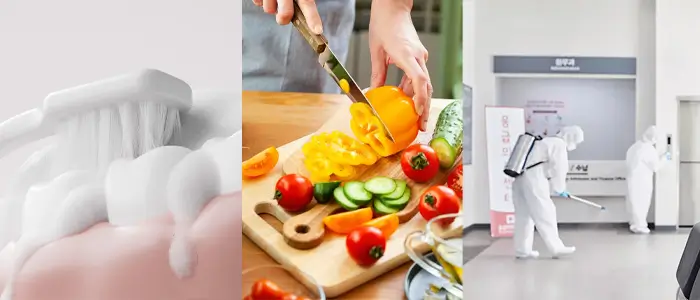
Waking up in the morning, you clean your hands with antibacterial hand soap; before heading to work, you brush your teeth with toothpaste claiming to “kill 99.9% of germs”; after lunch, you wipe down your desk with antibacterial wipes… These commonplace scenes in modern life may all be closely linked to a chemical called trichlosan. Once hailed as the star ingredient of the antimicrobial revolution, it now faces reassessment under scientific scrutiny.
Trichlosan(Triclosan) is a synthetic broad-spectrum antimicrobial agent with the chemical name 2,4,4′-Trichloro-2′-hydroxybenzene ether. Since its introduction in the 1970s, it has rapidly become a common additive in personal care, household cleaning, and medical products due to its exceptional antibacterial efficacy.
This white crystalline powder is practically insoluble in water but readily dissolves in organic solvents. It forms a persistent antimicrobial film on surfaces, effectively inhibiting the proliferation of bacteria, fungi, and certain viruses. Its primary mechanism of action involves inhibiting acyl-ACP reductase, a key enzyme in bacterial fatty acid synthesis, thereby disrupting bacterial cell membrane structure to achieve a bactericidal effect.
Personal Care Products: Antibacterial soaps, hand sanitizers, toothpaste, mouthwash, deodorants, shaving creams, etc. Notably, the U.S. FDA banned triclosan in bath products in 2016, though its use remains permitted in specific applications such as preoperative disinfection in hospitals.
Household and Textiles: Kitchenware, toys, bedding, towels, carpets, and other items are often treated with triclosan to achieve “antimicrobial” properties. Examples include antimicrobial cutting boards.
Medical Settings: Limited use persists in medical supplies such as preoperative disinfectants, medical dressings, and suture threads.
Both irritant contact dermatitis and allergic contact dermatitis induced by triclosan have been documented in the literature. Its sensitization mechanisms may involve:
Direct cytotoxicity: Higher concentrations of triclosan can directly disrupt the lipid structure of the skin’s stratum corneum, impairing the skin barrier function.
Immune activation: As a hapten, triclosan can bind to skin proteins to form complete antigens, triggering Type IV hypersensitivity reactions.
Release of inflammatory mediators: Studies indicate triclosan promotes the release of inflammatory factors such as prostaglandin E2 from skin cells.
Oxidative stress: Generation of reactive oxygen species leads to cellular damage and inflammatory responses.
Animal studies suggest triclosan may interfere with the normal functions of thyroid hormones, estrogen, and testosterone, affecting development and metabolism.
Chronic low-dose exposure may promote the selection and spread of bacterial resistance genes, including resistance to triclosan itself and cross-resistance to clinically important antibiotics.
Triclosan is poorly biodegradable and readily accumulates in the environment. It has been detected in rivers, soil, and even human breast milk, exhibiting toxic effects on aquatic organisms such as algae and fish.
A 2023 study in Environmental International indicates that triclosan may indirectly affect host immune function by disrupting gut microbiome balance. This new finding offers fresh insights into understanding its health effects.
Faced with mounting evidence, global regulatory attitudes have grown stricter. Beyond the U.S. FDA’s ban on certain products, the EU has also restricted its use. In China, triclosan is listed as an approved preservative for cosmetics but with strict concentration limits (maximum 0.3%) and is prohibited in products like toothpaste and mouthwash that may remain in the mouth for extended periods.
1.As consumers, how should we respond?
Approach “Antibacterial” Claims Rationally: For everyday household hygiene, regular soap and water handwashing remains one of the most effective and safest methods to prevent disease transmission. In most cases, there is no need to deliberately seek out “antibacterial” products.
Develop the habit of checking ingredient lists: When purchasing personal care, cleaning products, or plastic items, make it a practice to review the ingredient list. The common English label is Triclosan.
Support eco-friendly choices: Opt for products with simpler ingredients and clearer environmental certifications to reduce the cumulative environmental impact of personal use.
2.Targeted Alternatives
When antimicrobial agents are necessary, select based on specific use:
Medical settings: Safe and effective alternatives like chlorhexidine gluconate or povidone-iodine
Oral care: Ingredients like fluoride and xylitol are proven essential for oral health, eliminating the need for additional antimicrobials
Modern microbiology is reshaping our understanding of “cleanliness”: a completely sterile environment is not essential for health; symbiosis with beneficial microbes is the cornerstone of human well-being. Research on the household microbiome reveals that moderate microbial exposure aids children’s immune system development and reduces the risk of allergic diseases.
When selecting products, follow the “contextual principle”:
Daily maintenance: Standard cleaning products suffice
High-risk situations (e.g., handling raw meat, caring for patients): Consider using effective and safer antimicrobial products
Special needs: Choose based on doctor or professional advice
The next time we stand before supermarket shelves tempted by “antimicrobial” labels, perhaps we should ask: Is this our genuine need, or manufactured anxiety? In today’s era of transparency, true cleaning wisdom lies not in eradicating all microbes, but in establishing a healthy, balanced symbiotic relationship with the microbial world.
We are always committed to delivering optimal chemical solutions for all application scenarios.