- Tianqiao District, Jinan City, Shandong Province, China
- export01@jinbangch.com
- Mon to Sun: 8:00am – 6:00pm
When you think of nutmeg, you might picture the warm, spicy aroma in a stew or the exotic flair of mulled wine during the holidays. But scientists have extracted a humble yet versatile ingredient from the fatty chain of this ancient spice: myristyl alcohol. It features in the ingredient lists of high-end face creams, baby wipes, and even pet shampoos and conditioners. Today, let’s take a closer look at this ingredient.
Tetradecanol, also known as 1-tetradecanol, is a straight-chain saturated fatty alcohol with 14 carbon atoms. At room temperature, it is a white, waxy solid with a very faint oily scent. With a melting point of only about 38°C, it “melts” instantly upon contact with the skin. Tetradecanol is not an unfamiliar molecule created from scratch by humans; it occurs naturally in myristicin, coconut oil, and palm kernel oil. Commercial production primarily uses a combination of “natural raw materials and synthetic processes,” but most tetradecanol available today is derived from natural sources.
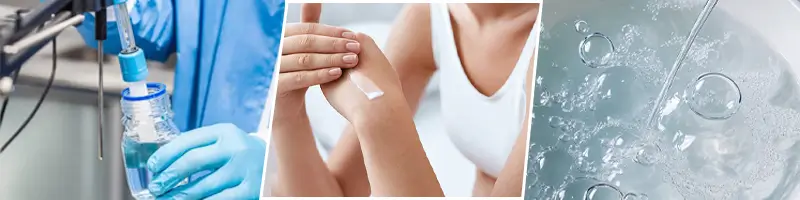
Cosmetics and Personal Care: As an emulsifying stabilizer, thickener, and emollient, it gives creams a smooth, fine texture and prevents oil and water from separating. It also regulates the spreadability of formulations; in conditioners, it helps smooth the hair cuticle and provides a tangle-free, wet-comb feel. Tetradecanol is commonly used at concentrations of around 10% in leave-on products and up to approximately 18% in rinse-off products. It is also a key precursor to the synthetic mild surfactant “tetradecyl glucoside,” which is widely used in cleansing products for mothers, infants, and those with sensitive skin.
Pharmaceutical Applications: 1- Tetradecanol serves as a hardening agent in ointment and suppository bases, adjusting the melting range to ensure even spread on the skin and achieve controlled thixotropy. In transdermal patches or gels, it also acts as a penetration enhancer, helping active ingredients smoothly cross the stratum corneum barrier. Most national pharmacopoeias list standards for similar fatty alcohols such as cetyl stearyl alcohol, but tetradecyl alcohol has carved out a niche in topical formulations requiring rapid melting due to its lower melting point and lighter skin feel.
Industrial Applications: Tetradecanol is a key component in lubricants, defoamers, metal cutting fluids, and textile auxiliaries. In particular, as a raw material for synthetic cationic biocides such as “tetradecyl dimethyl benzyl ammonium chloride,” it plays an indirect role in disinfection and sterilization in public spaces and medical settings.
Furthermore, Tetradecanol is added in trace amounts to high-end scented candles and textile auxiliaries, earning it the reputation as the “Swiss Army knife” of the ingredients world.
As a macromolecular fatty alcohol, Tetradecanol is virtually non-irritating and is not rapidly absorbed by the skin, thus causing no damage to the skin barrier. In the Human Repeated Irritation Patch Test (HRIPT),myristyl alcohol demonstrated negligible sensitization and irritation. After a comprehensive evaluation, the Cosmetic Ingredient Review (CIR) Expert Panel concluded that it is safe at current concentrations of use, and that myristyl alcohol is safe in leave-on cosmetics at concentrations not exceeding 10%.
However, is it suitable for acne-prone skin? The truth requires a closer look. According to Fulton’s classic rabbit ear comedogenicity model rating (0–5 scale), Tetradecanol has a comedogenicity index of 2, classifying it as a “mild comedogenic risk.” This score is significantly lower than that of isopropyl myristate (5) or lauryl alcohol (4), and is comparable to cetyl alcohol (2–3). It is non-sensitizing and does not trigger inflammation, but if applied in high concentrations, thickly, and over an extended period on oily or acne-prone skin, there is a chance it may contribute to the formation of microcomedones. In other words, for dry and normal skin types, it is a skin-friendly, nourishing choice; however, those with very oily skin should prioritize low-concentration or wash-off products when selecting occlusive creams containing tetradecanol.

A new question has arisen: Can I use skincare products containing tetradecanol on my dogs and cats?
From a toxicological perspective, tetradecanol is considered a low-risk chemical for dogs and cats as well—it contains no aromatic hydrocarbons or phenols and is not easily absorbed through the skin to cause systemic toxicity. In professional pet shampoos, tetradecanol is commonly used as a coat conditioner and emulsifier. It smooths the hair cuticles, giving the coat a silky sheen after washing, without disrupting the natural balance of sebum secretion.
However, the core concern is that cats are more sensitive than dogs, and both species lick their fur. Tetradecanol itself is non-toxic, but if dogs or cats repeatedly ingest large amounts of foam that has not been thoroughly rinsed off, it can lead to stomach upset and loose stools. Furthermore, high doses of long-chain fatty alcohols may interfere with cats’ already fragile fat metabolism. Therefore, the safety threshold is very clear:
Be sure to use products specifically formulated for pets, as their tetradecanol concentration (typically less than 2%) and formulation have been optimized for animals;
Rinse thoroughly to ensure no residue remains;
Never apply high-concentration human face creams or body lotions directly to dogs or cats without wiping them off.
Provided these guidelines are followed, cetearyl alcohol is safe for topical use on dogs and cats. It also reduces static electricity and minimizes matting, making it a “gentle lubricant suitable for both humans and pets.”
Jinan Jinbon Chemical supplies high-quality tetradecanol, offering samples and technical support at highly competitive prices.
If you are interested in tetradecanol, please feel free to contact us, request a sample, and place an order!
We are always committed to delivering optimal chemical solutions for all application scenarios.