
- Tianqiao District, Jinan City, Shandong Province, China
- export01@jinbangch.com
- Mon to Sun: 8:00am – 6:00pm


Ammonium polyphosphate (APP) is not simply a “polymer” of ammonium phosphate, but rather a “molecular key” that unlocks multiple functions—including flame retardancy, water-soluble fertilizers, and food processing—by controlling the length of its molecular chains. Today, with the explosive global demand for halogen-free flame retardants and precision agriculture, understanding the core properties of ammonium polyphosphate is crucial for procurement decisions.
Ammonium polyphosphate, abbreviated as APP, has the chemical formula (NH₄)₍ₙ₊₂₎PₙO₍₃ₙ₊₁₎. It is an inorganic polymer condensation product composed of phosphorus, nitrogen, hydrogen, and oxygen. The molecular chain is formed by tetrahedral phosphate groups linked via shared oxygen atom bridges, with ammonium ions distributed between the chains.
To put it simply, monophosphate ammonium (such as monoammonium phosphate) is a “single-family home,” while polyphosphate ammonium is a “row of townhouses” with a phosphorus-oxygen backbone—the longer the chain, the higher the molecular weight and the higher the degree of polymerization (n). The value of n is the key factor that determines whether it ultimately ends up as a fire-retardant material or in a fertilizer barrel.
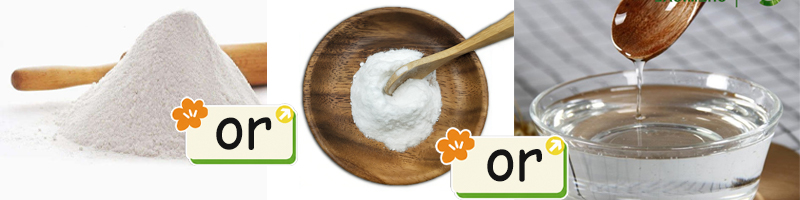
On the market, ammonium polyphosphate is primarily available in three forms: powder, granules, and liquid. Its physical and chemical properties are entirely determined by its crystal form and degree of polymerization:
| Core Parameters | Type I (Oligomeric, Water-soluble) | Type II (High Polymeric, Flame Retardant Grade) | Liquid Fertilizer Form |
|---|---|---|---|
| Macro Appearance | White hygroscopic powder or granules | White fine powder with excellent flowability | Colorless transparent viscous liquid (e.g. 10-34-0) |
| Degree of Polymerization (n) | Generally n < 20, mainly short-chain structure | n > 1000 with regular crystal structure | Mixture of low polymers including ammonium pyrophosphate, ammonium tripolyphosphate |
| Water Solubility (25℃) | Highly soluble, solubility >100g/100ml | Slightly soluble, hydrolysis rate <0.5g/100ml | Fully miscible with water |
| Phosphorus Content (P₂O₅) | Usually ≥57%, theoretical unit value 73.2% | ≥71.0% (industrial superior grade standard) | Approx. 34% – 37% (liquid formulation ratio) |
| Nitrogen Content (N) | Usually ≥14% | ≥14.0% | Approx. 10% – 11% |
| Thermal Decomposition Temperature | Low; easy to melt and soften under heating | ≥275°C (initial decomposition temperature) | Hydrolyzes upon heating |
| pH Value (10% Slurry) | 4.5 – 6.5 | 5.5 – 7.5, nearly neutral | Approx. 6.0 – 6.5 |

High-molecular-weight APP (Ammonium Polyphosphate Flame Retardant) serves as the acid source in chemically intumescent flame-retardant systems. Under high temperatures in a fire, APP decomposes to release phosphoric acid, which immediately esterifies the carbon source (polyol), while simultaneously releasing non-flammable gases such as ammonia. This process drives the foaming of the molten material, ultimately forming a dense char layer dozens of times thicker than the original material. The char layer provides thermal insulation, oxygen barrier, and smoke suppression—killing three birds with one stone.
Water-soluble oligomeric APP (Ammonium Polyphosphate Fertilizer) possesses the unique ability to chelate and dissolve metal ions such as calcium, magnesium, iron, and zinc. This prevents the formation of precipitates between phosphate ions and calcium or magnesium, thereby resolving the common issue of dripper clogging in water-fertigation systems. At the same time, ammonium polyphosphate gradually hydrolyzes in the soil into orthophosphate ions for crop absorption, achieving “slow-release without loss of efficacy.”
In accordance with “GB 1886.343-2021 National Food Safety Standard: Food Additives—Ammonium Polyphosphate,” this type of product is primarily used in flour-based products, batter for deep-frying, and multigrain flours, where it functions as a leavening agent, moisture retainer, and acidity regulator. This grade is subject to extremely stringent limits on impurities such as heavy metals (arsenic, lead) and fluorides; a food production license is required for procurement.
Dry Powder Fire Extinguishing Agents: Ultrafine APP powder is a core component of Class ABC dry powder fire extinguishing agents, offering extremely high fire-extinguishing efficiency.
Detergent Additives and Oil Drilling: It is used as a dispersant and retarder in high-end phosphate-free detergent additives and oil drilling cement slurries.

For compounding and pelletizing (e.g., flame-retardant PP), unmodified APP has poor compatibility with the resin and is prone to migration and leaching. In such cases, it is necessary to procure grades that have undergone surface activation treatment; this can be verified simply by measuring the powder’s moisture absorption rate or contact angle.
Sample Application Testing Before bulk purchases, samples must be prepared according to the final formulation. For flame-retardant coatings, test samples are used to measure the actual expansion ratio and char layer strength; for water-soluble fertilizers, a 1% solution is prepared and left to stand for 24 hours to observe whether any sediment precipitates.
Jinan Jinbon Chemical is a professional ammonium polyphosphate supplier. We offer ammonium polyphosphate with stable and reliable performance. Our pricing fluctuates with market conditions. If you are interested in our products, please feel free to contact us at any time.
We are always committed to delivering optimal chemical solutions for all application scenarios.